What Is DC Fast Charging and Which Vehicles Can Use It?
Learn how DC fast charging works, why it can be faster than AC, which vehicles support it and what limits actual charging power.
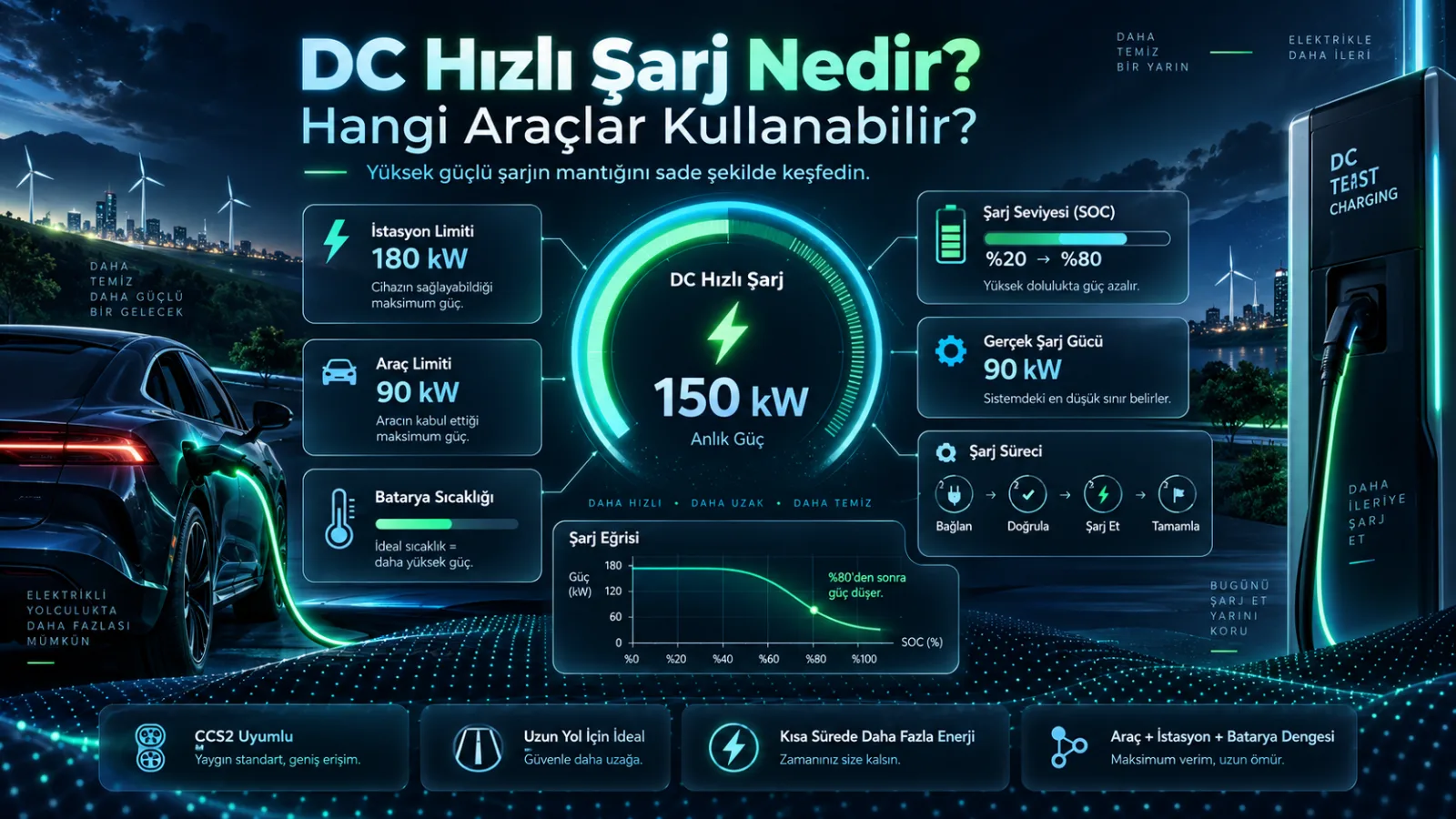
Table of contents
What Is DC Fast Charging and Which Vehicles Can Use It?
Charging time matters to EV drivers, especially on long journeys or when a vehicle must return to service quickly. DC fast charging can supply much higher power than typical AC charging. Not every EV, however, supports the same DC power. A 180 or 240 kW station cannot make an incompatible vehicle charge at that rate.
What is DC fast charging?
DC means direct current, the form of energy stored in an EV battery. A DC station uses its own power electronics to convert AC electricity from the grid into DC, then supplies it to the vehicle’s battery system.
Electrical grid → DC charging station → vehicle battery
Because the vehicle’s onboard AC charger is bypassed, much higher charging power can be possible.
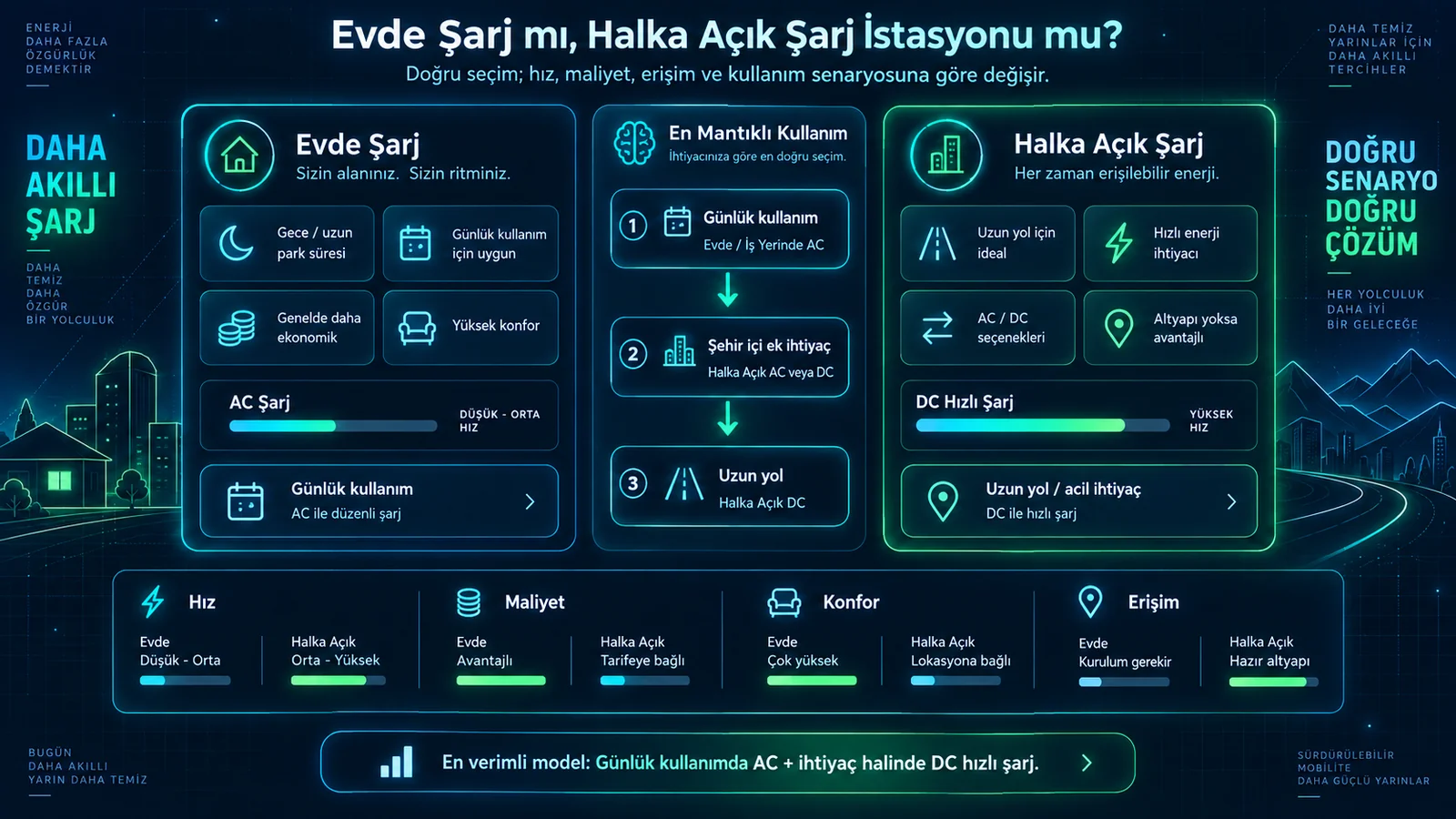
Why can DC be faster than AC?
With AC charging, conversion happens inside the vehicle. The onboard charger’s physical size, cooling, cost and power electronics limit the AC rate. A DC station can contain larger power modules, stronger cooling, higher-current cabling and a more substantial electrical installation. It can therefore deliver more energy in a shorter time.
What power ratings are available?
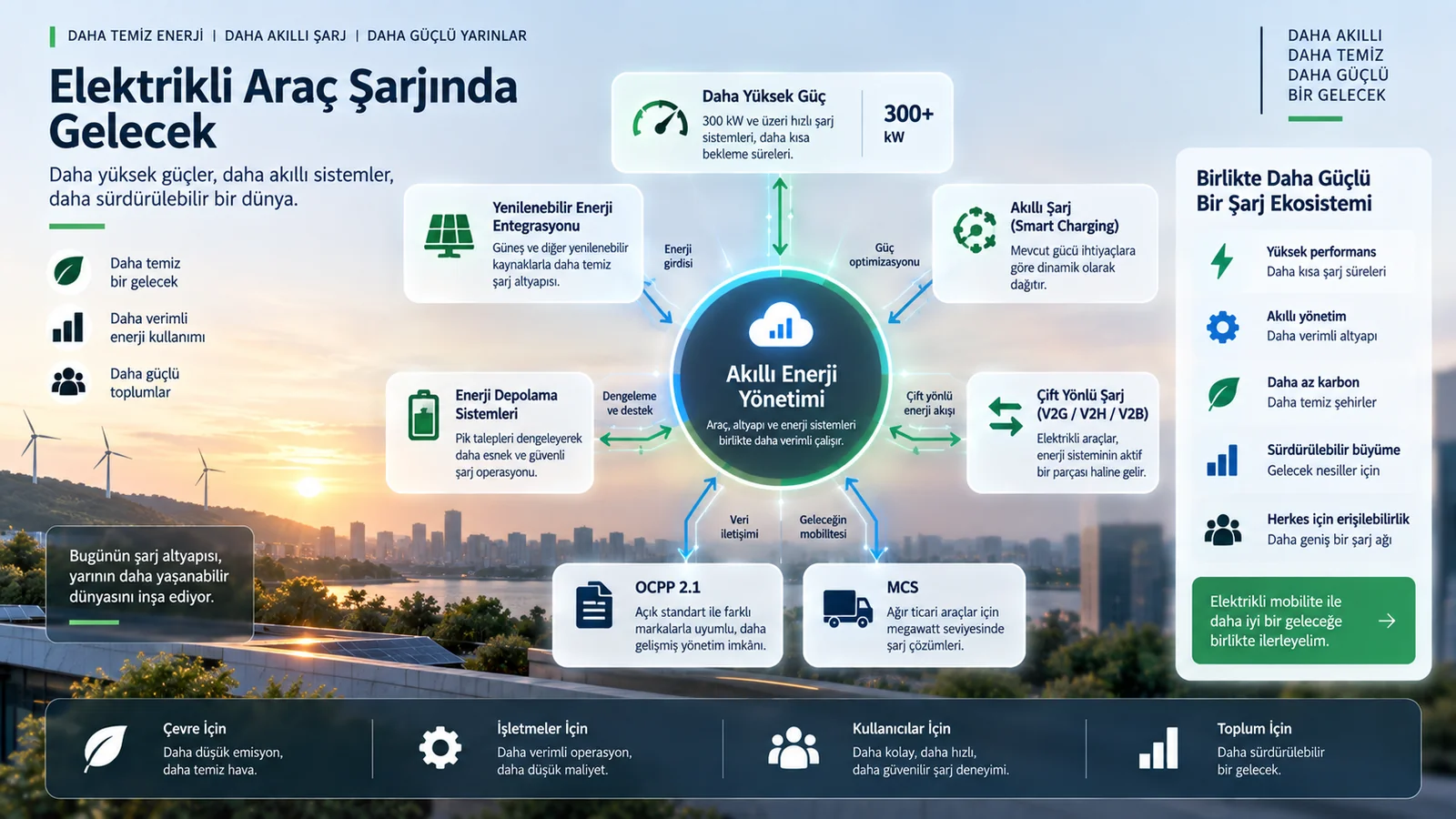
DC systems can be offered at 30, 40, 60, 90, 120, 150, 180, 240 and 320 kW, among other ratings. The crucial point is that a station’s maximum rating is not the power every vehicle will actually receive.
Which vehicles can use DC fast charging?
The vehicle must support DC charging and have a connector compatible with the station. Its specifications might state a maximum DC rate of 80, 150 or 250 kW. A vehicle equipped only for AC charging cannot use a DC fast charger.
Can plug-in hybrids use DC?
Some plug-in hybrid models support DC charging, while others support AC only. Being a plug-in vehicle is not enough; check the specific model’s DC charging capability.
What is CCS2?
CCS2 is a common DC fast-charging connector in Turkey and Europe. A compatible vehicle can connect to a suitable CCS2 station, communicate with it and undergo the necessary safety checks before high-power energy transfer begins.
Having a CCS2 port does not mean the vehicle can use the station’s full rated power.
What about CHAdeMO?
Some vehicles use CHAdeMO for DC charging. CHAdeMO and CCS2 are physically different. A CCS2 vehicle needs a compatible CCS2 connector; a CHAdeMO vehicle needs a station that supports CHAdeMO. Check the connector standard before travelling to a station.
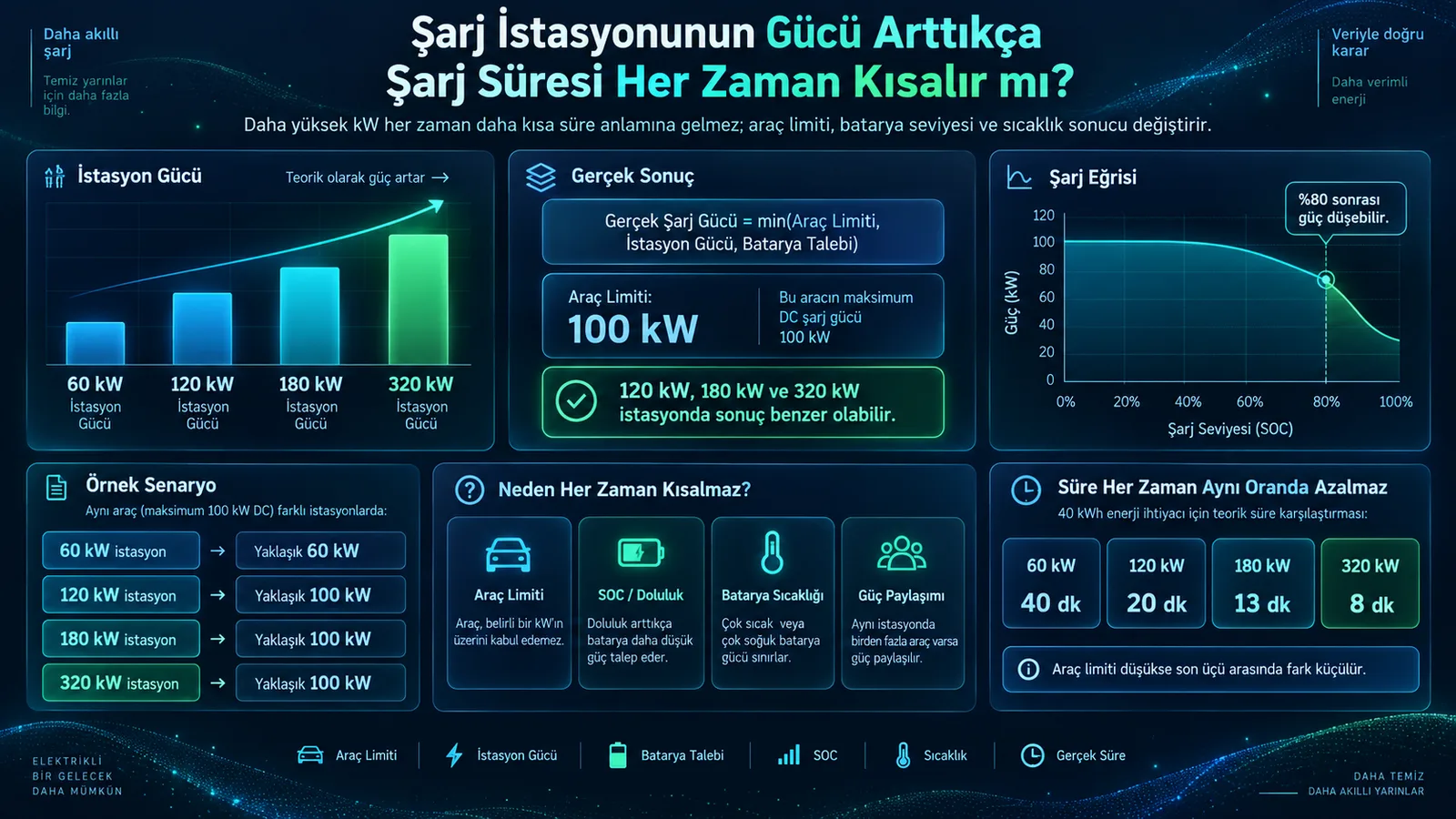
Why does a car draw less than 180 kW from a 180 kW station?
Suppose the station can deliver 180 kW, the vehicle supports at most 120 kW, and its battery requests 85 kW at that moment. Actual charging power may be around 85 kW. The station does not force its maximum power into the car.
Relevant limits include station output, vehicle capability, battery state of charge and temperature, the battery management system’s request, available site power and any power sharing between connectors. In simplified terms, the lowest active limit governs the result.
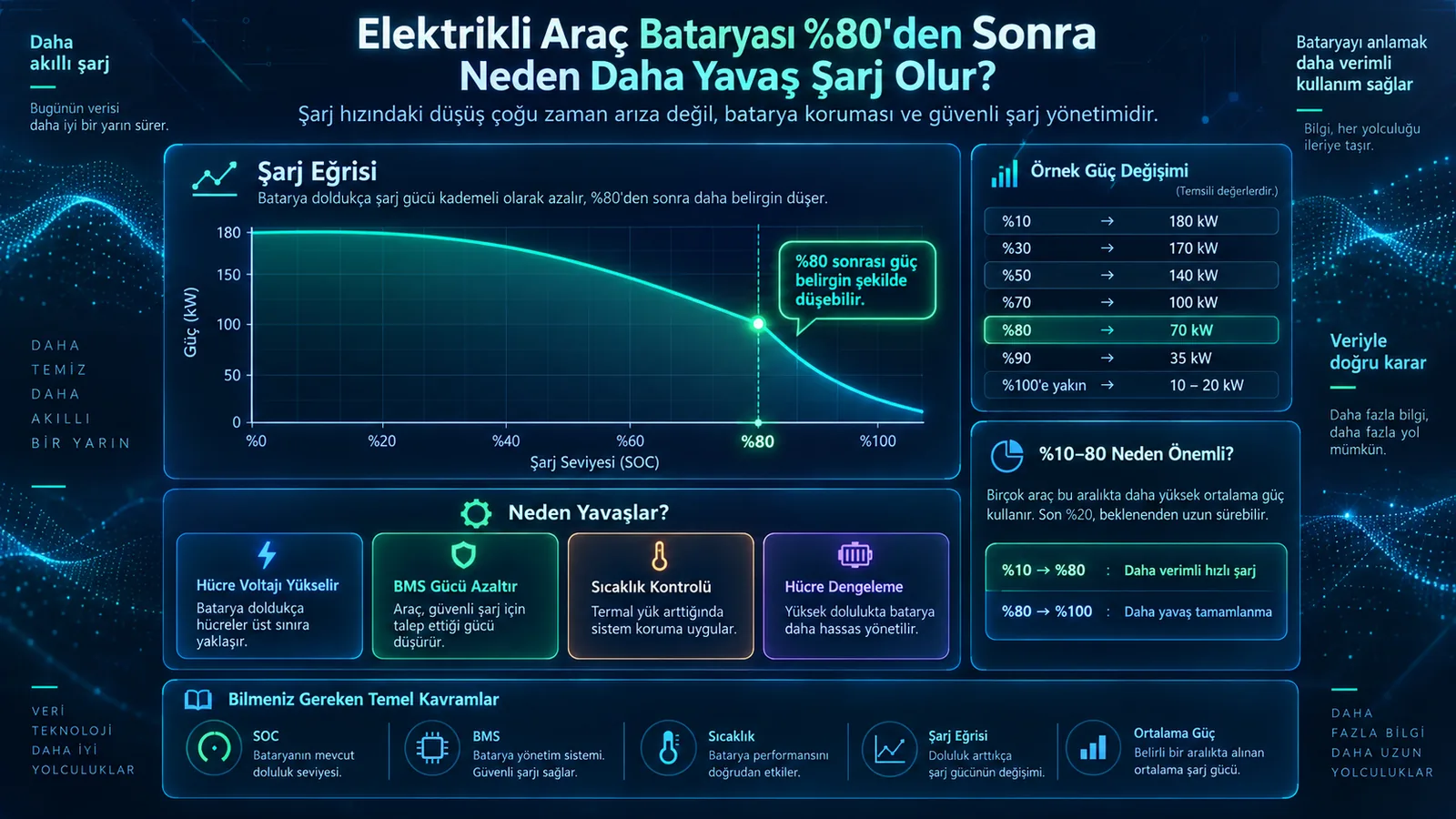
Does battery charge level affect power?
Yes. An EV may charge at 150 kW from 10–30%, 120 kW from 30–60%, 80 kW from 60–80% and 40 kW above 80%, for example. This changing pattern is the charging curve, and it varies by vehicle.
Why is 80% often discussed?
Many vehicles reduce DC charging power at high states of charge. On a long trip, charging from about 10% to 80% can therefore be more time-efficient than waiting for the final 20%. The ideal stopping point still depends on the route and vehicle.
Why does battery temperature matter?
Very cold or hot batteries may accept less power. After a car has stood in winter weather, it may not immediately draw the expected power even at a high-output station. Some models precondition the battery before arrival to help it reach a more suitable temperature.
Do 400 V and 800 V vehicles behave differently?
EVs use different battery-voltage architectures, including roughly 400 V and 800 V classes. The basic relationship is Power = Voltage × Current. A higher voltage can transfer the same power at a lower current, which can help high-power charging design. The vehicle and station must still be compatible across the required voltage and current range.
Does a more powerful station benefit every vehicle?
Not necessarily. A vehicle limited to 70 kW DC may see little difference between a 120, 180 and 300 kW station for its own session. A more powerful station can still be useful to an operator planning for future vehicles, power sharing or higher traffic.
Does DC fast charging damage the battery?
High power and heat can create more thermal load, but modern vehicles use battery management systems to control charging. The car monitors temperature, cell voltages, current and state of charge, and can reduce its power request when needed. Battery longevity depends on charging habits and temperature as well as charging method.
How does a driver use DC charging?
- Choose a DC connector supported by the vehicle.
- Plug it in.
- Start the session through the app, RFID card, QR code or station interface.
- Let the vehicle and station check the connection.
- Charge, then end the session.
- Remove the cable after the connector unlocks.
The vehicle and station control charging power automatically.
Why might a DC session fail to start?
Possible causes include an incompletely seated connector, communication or locking problems, a failed insulation check, a temperature limit, a vehicle-side charging restriction or a station fault. DC charging involves several checks before energy can flow.
What happens when two vehicles charge together?
A dual-connector station may divide its total output. A 180 kW unit could, depending on its design and vehicle demand, distribute power as 90 + 90 kW, 120 + 60 kW or another dynamic split. Check simultaneous charging and power-sharing behaviour, not only total kW.
Where is DC fast charging useful?
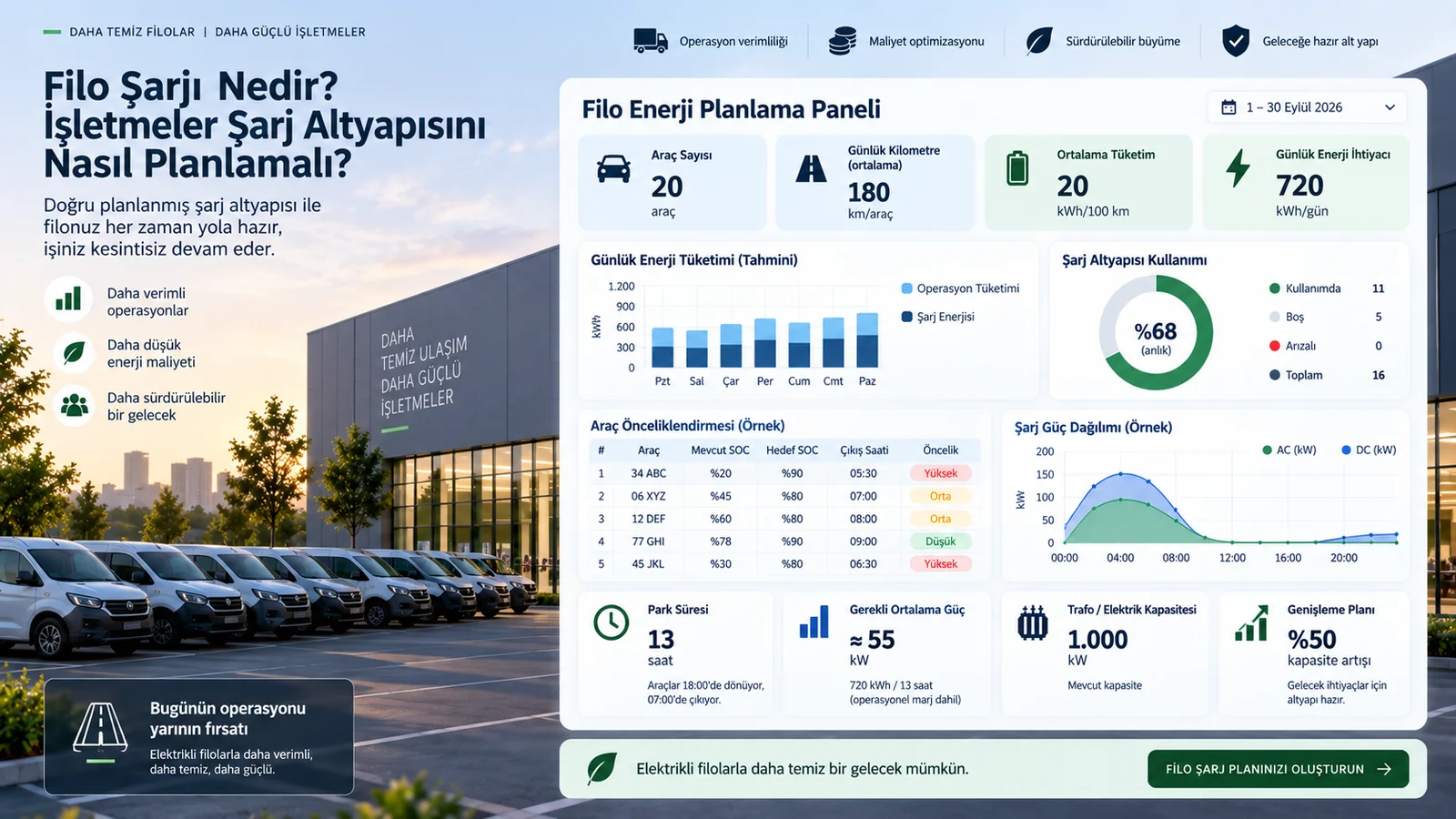
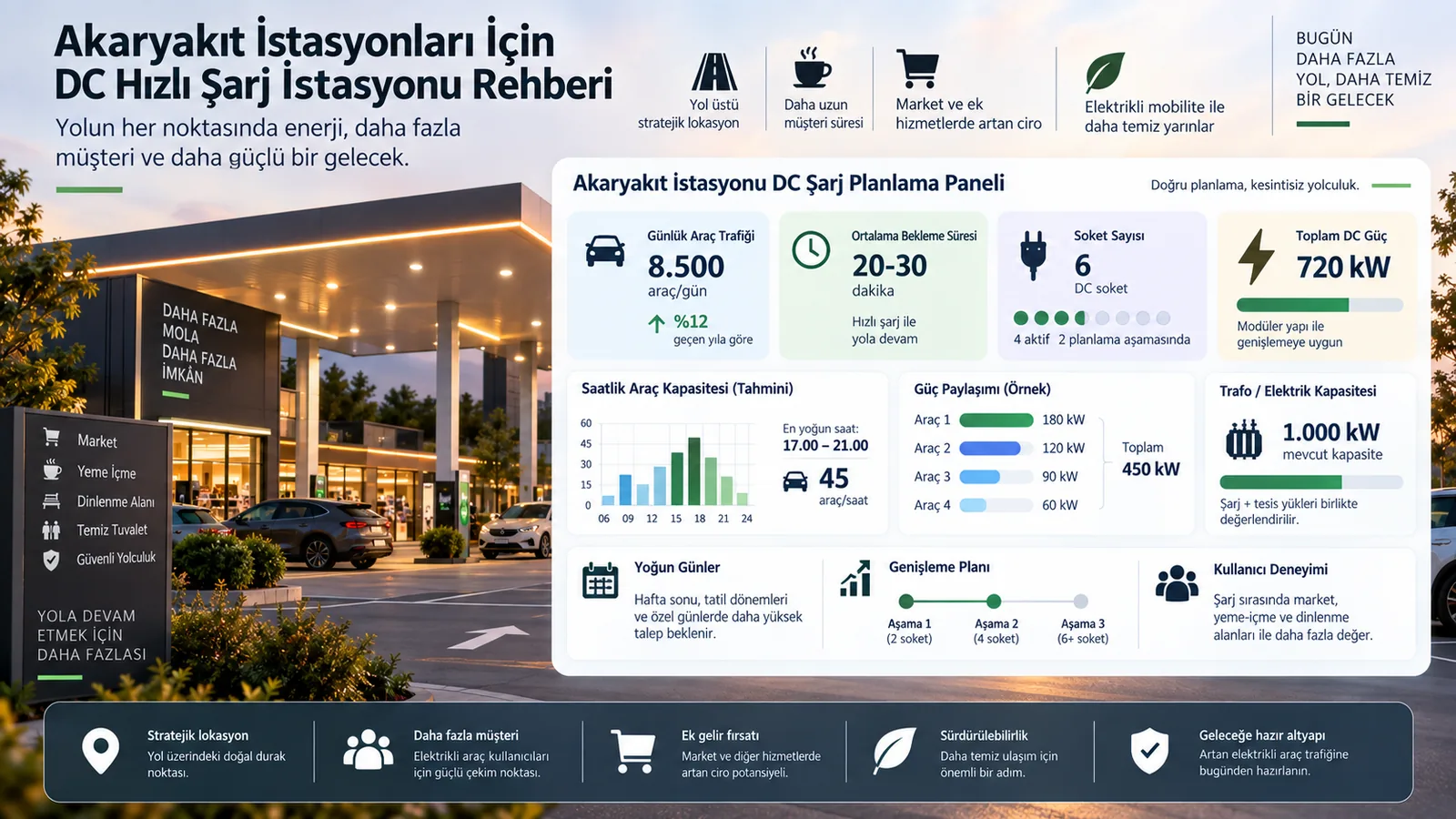
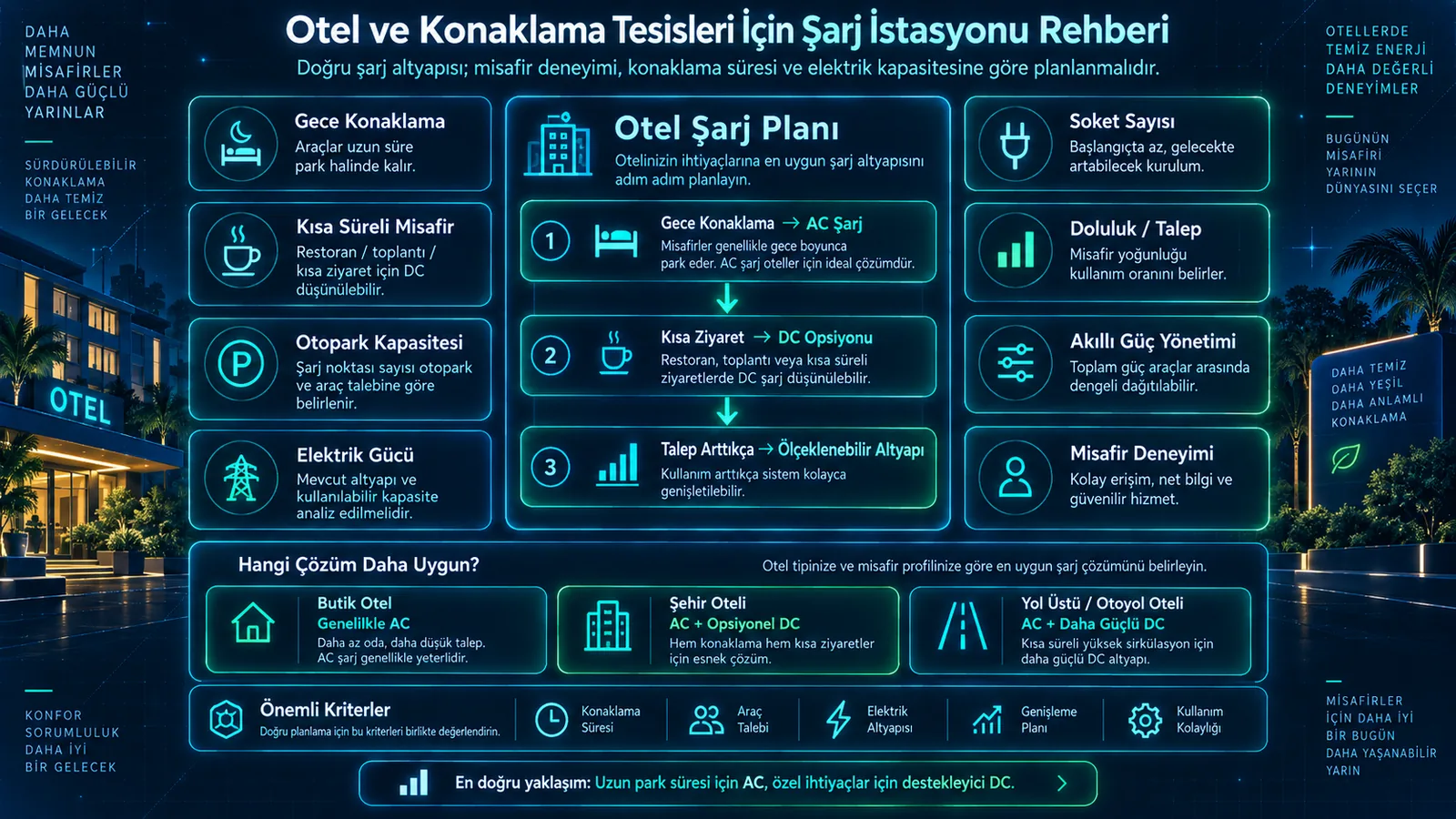
It is particularly useful where short stops matter: highways, fuel stations, rest areas, commercial charging locations and fleet operations. In a city, the right rating may be lower. A restaurant visit of one hour, a two-hour shopping trip and an overnight hotel stay do not require the same charging speed.
What should an operator check when choosing a DC station?
Assess maximum output, voltage and current range, connector count, simultaneous use, power sharing, CCS2 support, cable cooling, remote management, OCPP support and maintenance arrangements.
| Use case | Indicative DC range |
|---|---|
| Urban site with longer stops | 30–60 kW |
| Commercial site | 60–120 kW |
| Fuel station or roadside site | 120–180 kW |
| Highway or high-traffic site | 180 kW and above |
| High-performance charging hub | 240–320 kW and above |
These are starting points, not fixed rules. Available power, vehicle mix, dwell time, traffic and budget determine the appropriate design.
Conclusion
DC fast charging supplies high-power direct current to an EV battery and can shorten stops on journeys, at commercial sites and in fleet operations. The vehicle needs compatible DC hardware and a suitable connector. Its actual rate depends on both vehicle and station conditions. Choosing power that matches the vehicles and the site is more useful than choosing the largest kW figure.
About the author
Charge Teknoloji
Charging Infrastructure Team
Charge Teknoloji develops locally manufactured DC charging stations and OCPP-compatible charging network software.
LinkedIn arrow_outwardBe the first to hear about updates
Follow new content on electric vehicles and charging technologies.