What Is OCPP in Electric Vehicle Charging Stations?
Learn how OCPP connects chargers to a central system, which operations it supports, and how versions 1.6, 2.0.1 and 2.1 differ.
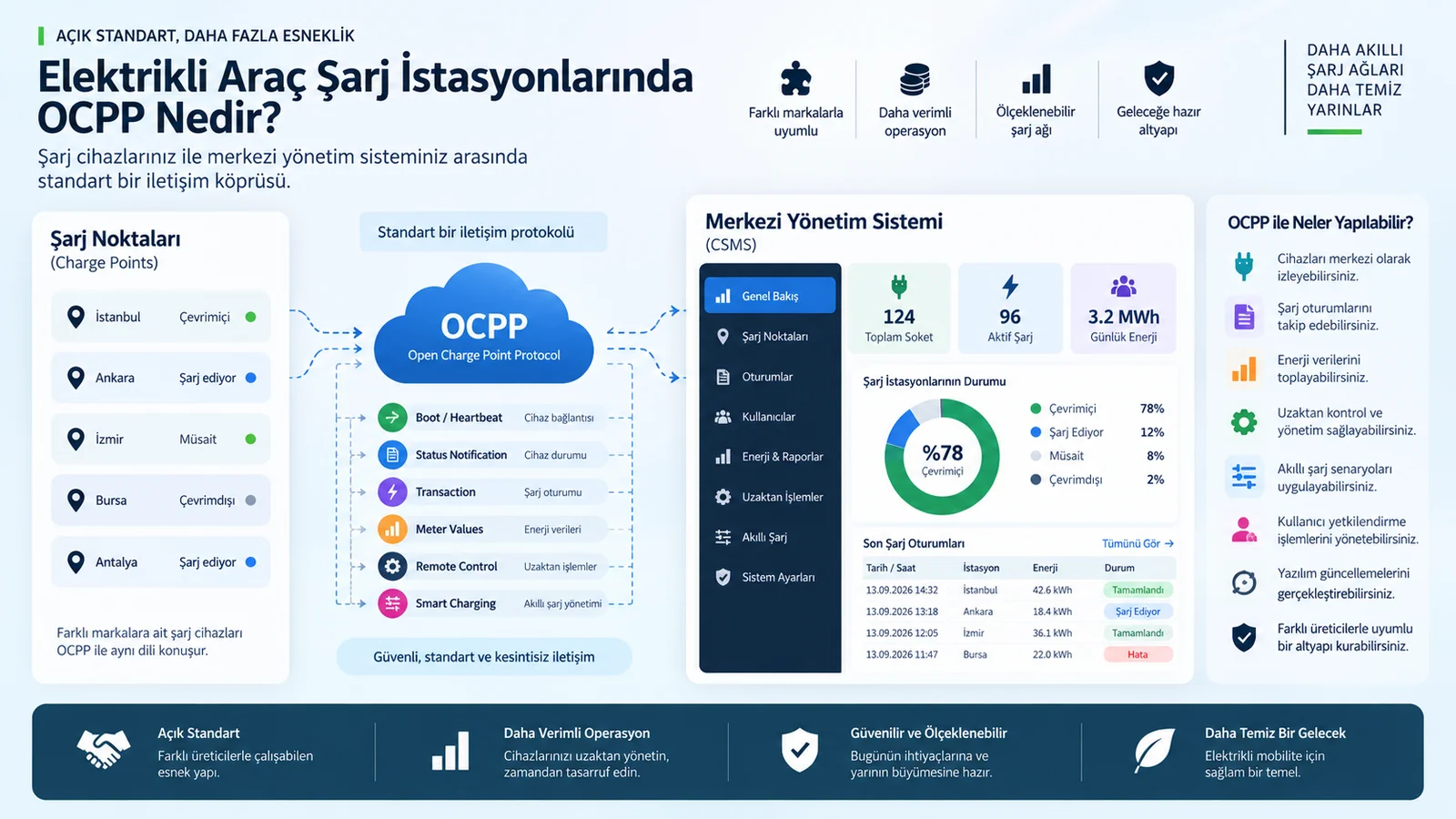
Table of contents
What Is OCPP in Electric Vehicle Charging Stations?
OCPP, the Open Charge Point Protocol, is a communication standard between a charging station and a central charging-station management system (CSMS). It is not the protocol that controls communication between the car and the charger, and it is not itself a payment system. It gives an operator a common way to observe and manage chargers across a network.
Why is OCPP useful?
Without a common protocol, an operator can become dependent on a single manufacturer’s software. An open protocol can make it easier to combine compatible chargers and management platforms, change suppliers and expand a network. That flexibility still requires actual integration testing: saying two products support OCPP does not prove that their optional functions, configuration and implementations work together.
For drivers, effective monitoring and remote support can improve the availability of charging points. For operators, OCPP provides the data and controls needed to manage many locations from one system.
What can the charger and CSMS exchange?
Depending on protocol version and implementation, the system may exchange:
- connection and availability status;
- connector state and fault information;
- authorization and charging-session events;
- meter readings and energy consumed;
- remote start, stop or reset commands;
- firmware-update and diagnostic information;
- charging profiles for power management.
When a charger connects, a BootNotification identifies it to the central system. Periodic Heartbeat messages help indicate that it remains connected. Transaction and meter messages let the operator follow a session and its energy use. This helps support teams spot faults and assess station performance.
Remote start and stop, a reboot or a firmware update may be available, but their availability depends on the device, platform and supported protocol functions. A remote command also cannot repair every physical fault.
Smart charging and connectivity
Smart charging can assign or limit power across chargers so a site stays within its available electrical capacity. The management system can use charging profiles and site rules instead of letting all vehicles demand maximum power at once.
OCPP normally relies on a network connection for central communication. If the connection fails during an active session, the outcome depends on the charger’s offline behaviour and configuration. It should be checked during commissioning rather than assumed.
Which OCPP version should a project use?
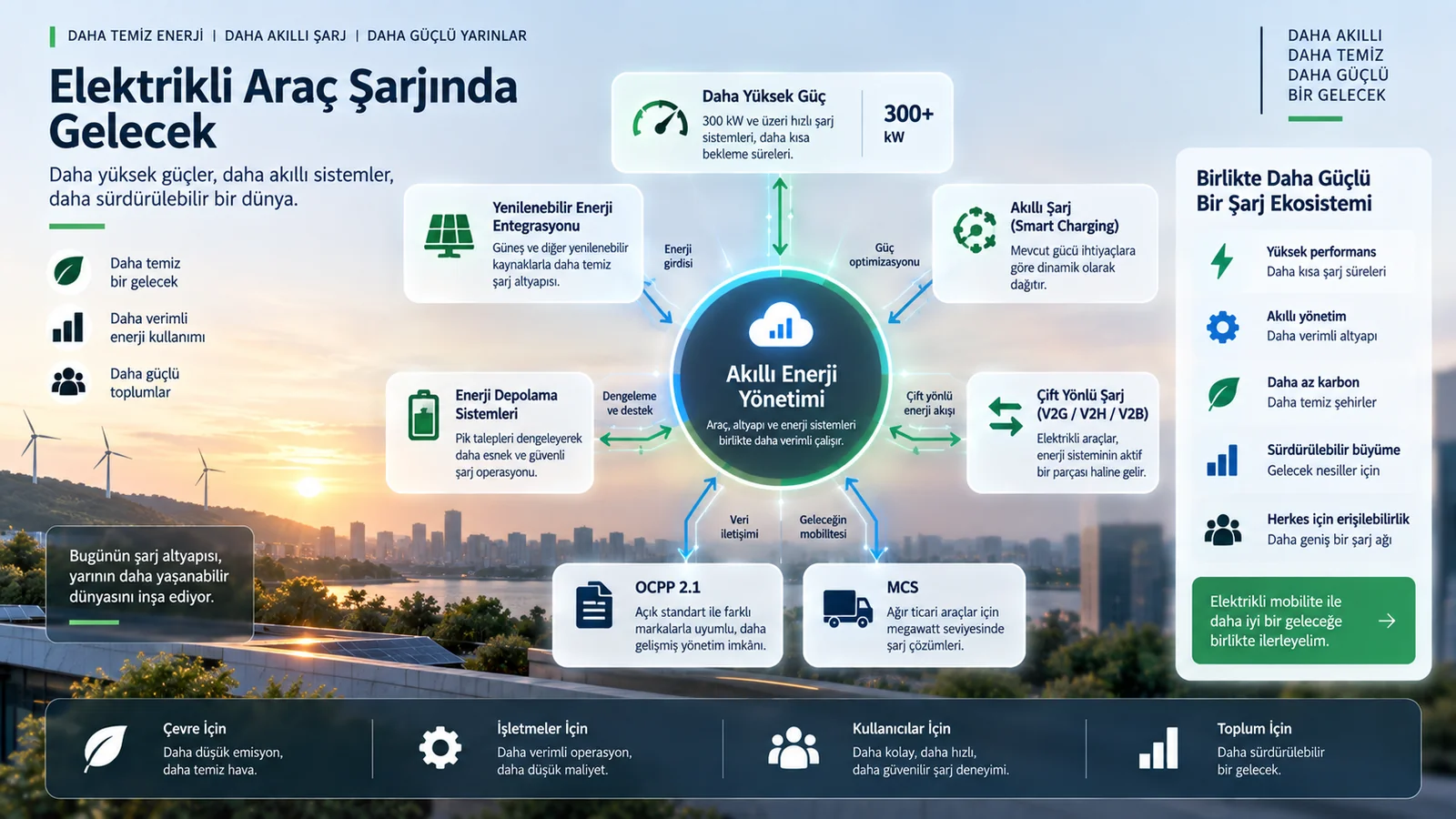
OCPP 1.6 has a large installed base and supports common connection, session, monitoring, remote-operation and smart-charging scenarios. OCPP 2.0.1 makes substantial architectural changes, including a richer device model, transaction management and security functions. It is not directly backward-compatible with 1.6. A CSMS can manage both kinds of charger only if it separately supports both versions.
OCPP 2.1 builds on 2.0.1 and adds capabilities related to ISO 15118-20, bidirectional-energy scenarios, distributed energy resources and authorization. It does not follow that every new project must use the newest version. Choose according to the existing management platform, charger compatibility, required features and growth plans.
For procurement, check the exact OCPP version, supported functions or profiles, certification where relevant, and a real integration test with the intended CSMS. An open protocol reduces the risk of vendor lock-in, but does not replace commissioning, network design, maintenance or technical support.
About the author
Charge Teknoloji
Charging Infrastructure Team
Charge Teknoloji develops locally manufactured DC charging stations and OCPP-compatible charging network software.
LinkedIn arrow_outwardBe the first to hear about updates
Follow new content on electric vehicles and charging technologies.